

Between 2014 and 2025, Princeton’s Housing Problem Flipped
Princeton’s 2025 Community Needs Assessment found that for many lower-income residents, the problem isn’t that services don’t exist. It’s that people can’t find them, or get through the application process to reach them.
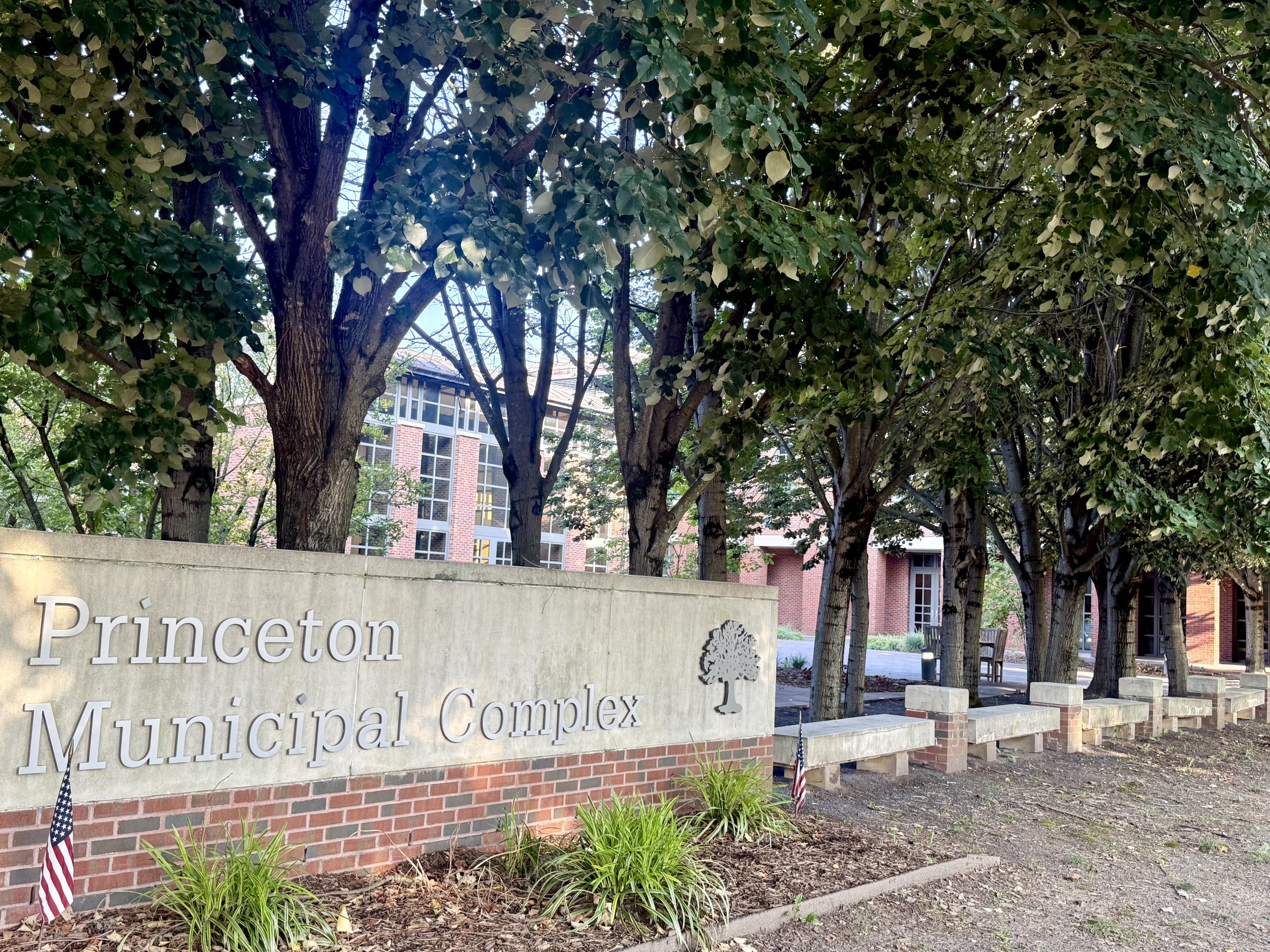
Princeton Municipal Complex, where the 2025 Community Needs Assessment was presented to Council on July 13, 2026. Photo by Princeton Policy Review.
In 2014, Princeton residents said the help they were looking for often didn't apply to their situation, or cost too much to use. In 2025, they're saying something different: the help exists, they just can't find it.
According to the 2025 Community Needs Assessment conducted between August and December of 2025 and presented to Council on July 13, 2026, more than half of the 253 low-to-moderate-income households surveyed pointed to the same underlying problem: a gap between the services Princeton offers and the services residents actually know about.
This isn't the first time Princeton has asked its residents what they need. An assessment was also conducted between 2020 and 2022, but because it took place at the height of the pandemic, it's hard to treat as a clean comparison. That makes the 2025 Community Needs Assessment the first truly comprehensive assessment Princeton has conducted since2014, eleven years earlier, and the findings were quite different.
That report identified rent and mortgage assistance as the biggest housing concern amongst respondents. The primary reason for this was the fact that many services offered then did not apply to the situations they needed help in. Moreover, those services were challenging for residents to access.
In 2025, that's not the case.
Since then, many new services for different situations have evolved within Princeton. Now, however, the problem rests upon the awareness residents have of such services. Affordable housing is a clear example. In Princeton, many people still don't know about the affordable housing options available to them, and for those who do, the process to acquire such a unit requires extensive applications to fill. The purpose of an affordable housing service is to spread awareness of affordable housing options and then guide and assist residents through it. If a service is unknown, none of what it offers, guidance, assistance, alleviating the process, ever reaches the people who need it.
Essentially, the problem 11 years ago has since evolved. Now Princeton doesn't lack services, it lacks the awareness of it to the people. This creates the “awareness gap.”
So what exactly led to these services not being known within the community? The likely reason lies behind the first step to anything, where to find these services:
Residents have spoken up about the on-site tools and navigators people used to rely on, that aren't here anymore. There is no one guiding people where to go, what to look for, and how to go about finding even one service. Once, residents relied on trusted professionals in their buildings to guide them to new services and organizations. Now, residents claim such relationships have “eroded over time,” with any on-site presence for navigation completely gone.
The report cites one resident suggesting a possible fix.
"The Princeton Human Services Department comes once a month to tell residents what's going on and help fill out papers."
But even for the residents who do find their way to an affordable housing listing, without a navigator, the process waiting on the other side is its own obstacle.
Applications for affordable housing within Princeton can be extensive, requiring a multi-step process, starting with a common application online and then spreading to separate paper forms for each individual property at the Princeton Housing Authority office. And even after the application process is finished, the wait time is indefinite. Some residents have reported waiting “about a year and a half to two years” without any results.
Affordable housing organizations are meant to guide residents through such a process like filling out applications. If that's not happening then that compromises the accessibility of affordable housing options to the people, with many just giving up or stopping at the application alone.
But the service gap only affects residents who qualify for affordable housing in the first place. For a growing number of Princeton families, the problem starts earlier than that.
Princeton, an already affluent Municipality, is now paving the way for more affordable units. However, many people argue that with these units specifically targeted for lower income families, there remains a missing middle. Families who earn enough to not fall within the requirement of affordable units, are still priced out of Princeton due to the market rate units exceeding their budget. Residents noted that the cost of living in Princeton is "disproportionately high,” making Princeton inaccessible to many middle class income families and professionals. So naturally, you're left to ponder, who in Princeton is really building housing for these middle income families? Or is this a new accessibility issue?
The report doesn't leave that question fully unanswered. Buried in its recommendations within the Opportunity 4 paragraph, the report addresses issues with both the service gap and the missing middle. However, in terms of the implementation, the only given answer is a list of housing organizations.
To understand what that actually looks like, Princeton Policy Review interviewed Councilman Leighton Newlin, a Council liaison to CARES, one of the organizations named in Opportunity 4, about what closing the awareness gap will look like in practice.
"The plan is still being worked on," the Councilman said. "But the plan is to set up workshops, perhaps at the Princeton Public Library. We want to make awareness greater by going right to the people."
On improving on-site navigation, the Councilman pointed to "the use of volunteers."
As for making the application process less difficult, he emphasized relying on local organizations, like Princeton Community Housing, to streamline the process rather than depending on larger, existing systems.
When asked about the timeline, and when residents might start seeing change, the Councilman said the council plans to meet CARES "as soon as possible," with a rough window of 30 to 60 days to set dates and reach out to community partners. He added that CARES will set up a table during Welcome Week, which takes place the second week of September. "Now that we know the report has shown a lack of awareness, it's go time," he said.
Ultimately, Princeton's own data shows the barrier has shifted, from a lack of services in 2014 to a lack of awareness and access today. With Opportunity 4 naming a list of organizations, the picture of implementation stayed incomplete. Councilman Newlin's interview filled in some of that picture: workshops, volunteers, and local partnerships all show that a plan is already taking shape. However, now the question forms: will real implementation follow, and will that be enough to actually close the gap?
Additional reporting by Audrey Zhang. Data not otherwise linked is from the 2025 Princeton Community Needs Assessment.
2025 Princeton Community Needs Assessment
Correction 08/12/26: The opening sentence has been updated for clarity. It now reads: "In 2014, Princeton residents said the help they were looking for often didn't apply to their situation, or cost too much to use."
We use your email only to send the monthly newsletter: never sold or shared, unsubscribe any time.
After the Court Decision: What 108 Stockton Street Means for Princeton
On February 13, 2026, Judge Robert Lougy of the Mercer County Superior Court approved Princeton's Fourth Round housing plan, clearing a major hurdle for the 108 Stockton Street development.
It's no surprise that the development has drawn the attention of many Princeton residents.
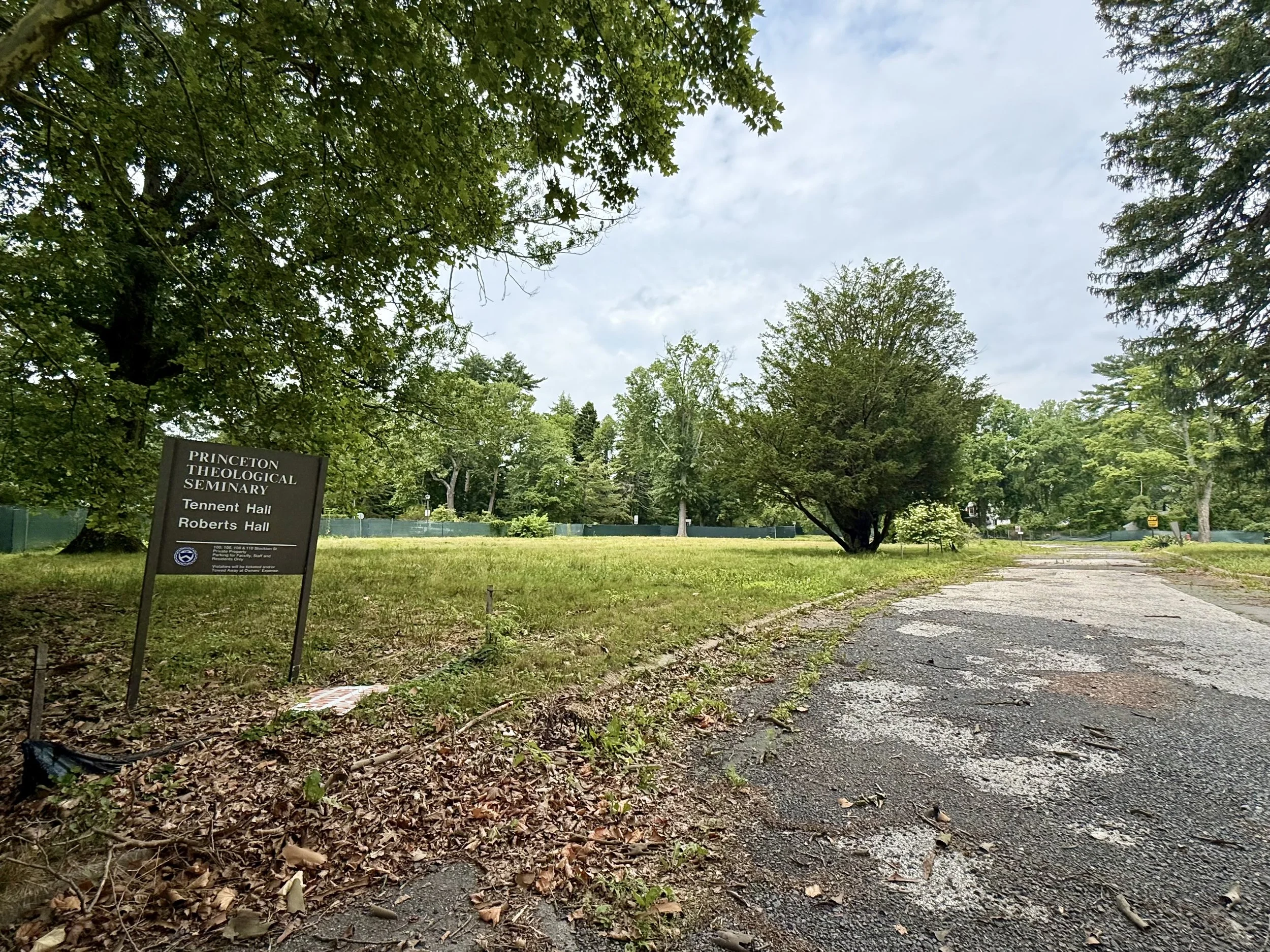
The former Princeton Theological Seminary campus on Stockton Street, site of the proposed development. Photograph by Audrey Zhang.
On February 13, 2026, Judge Robert Lougy of the Mercer County Superior Court approved Princeton’s Fourth Round housing plan, clearing a major hurdle for the 108 Stockton Street development.
It’s no surprise that the development has drawn the attention of many Princeton residents. This proposed mixed-income project stands just short of construction, awaiting final board site approval after nearly three years in planning. The former 4.8-acre Tennent-Roberts-Whiteley campus, owned by the Princeton Theological Seminary, is under contract for sale to Herring Properties for redevelopment. In total, 238 new housing units are to be built: 190 designed as market-rate, expected to rent from $3,000 to $4,000 per month depending on size, and 48 designed as affordable. Unlike market-rate apartments, affordable units are priced based on a household’s income relative to the area median income (AMI), making them available to low- to moderate-income households. The development would both expand Princeton’s housing supply and help the municipality meet the state’s affordable housing requirement.
Although town officials have been open about their support, the development’s objectors remain skeptical of both the process and the project itself.
Sean Wilentz, a history professor at Princeton and co-founder of Defend Historic Princeton, an organization that opposes the development, told The Daily Princetonian in December 2025: "This is not just any town, any municipality, just like this is not just any university." He isn't alone. A walk along Stockton Street reveals rows of houses with "Defend Historic Princeton" signs out front.
The Tennent-Roberts campus, once part of Princeton Theological Seminary, now sits vacant behind fencing. Although the Princeton Theological Seminary itself continues to operate, its chapel, library, and academic buildings still open. As residents and tourists pass the Tennent Robert campus, they are met by long green barricades blocking the grassy landscape and fallen trees along Stockton Street.
Residents raise other concerns too: construction traffic on Route 206 during commute hours, density once the complex is occupied, and environmental risks from heavy vehicles working the site.
At the June 8, 2026 council meeting, one resident raised her concern over the nearby Spruce Street development, being built "10 feet away from her backyard."
Residents are justified in raising these concerns. But there is a broader policy context at work.
When town officials, and Councilwoman Mia Sacks in particular, supported the development, they did not dismiss residents’ concerns about traffic, density, and environment. Instead, they weighed them against the town's Fourth Round affordable housing obligation
The Fourth Round obligation is Princeton's affordable housing plan for the decade, 2025 to 2035. For years, Princeton, like many New Jersey municipalities, used exclusionary zoning that limited apartments, duplexes, and smaller homes, indirectly pricing out low- and middle-income families. New Jersey's 1975 Mount Laurel Doctrine set out to correct this, requiring each municipality to meet successive rounds of affordable housing obligations. Princeton is now in the fourth round, and Stockton Street is central to meeting it.
The municipality wrote, in its summary of the decision: "Both Judge Miller and Special Adjudicator Cofone specifically found that the 108 Stockton Street inclusionary project is set to deliver 48 affordable homes in a highly suitable location that is proximate to transit, services, and employment opportunities." An inclusionary project is one that mixes affordable and market-rate units in the same development rather than building them separately.
On paper, the project checks the boxes: it helps satisfy the state mandate while redeveloping a long-vacant parcel. But opponents are careful to say their objection isn't to affordable housing itself. "Our concerns were not about whether Princeton should meet its affordable housing responsibilities, but about how those responsibilities are implemented," said Jo Butler of the Princeton Coalition for Responsible Development wrote in a statement to The Daily Princetonian.
Their argument centers on scale. Defend Historic Princeton contends the complex would be the densest development in any residentially zoned area in Princeton, with buildings reaching as high as 70 feet among two- and three-story homes, some dating to the 1840s. Opponents say that in 2023 they proposed an alternative: a fully affordable development of roughly 50 units, more than the 48 in the current plan, at a scale they argue better fits the neighborhood. The town did not adopt it.
The likely reason lies in how Mount Laurel is meant to work. The doctrine calls for low- and moderate-income housing to be integrated throughout a town, not concentrated in one place, in order to avoid economic segregation. A fully affordable complex would make the state’s unit requirement easier to meet, but it would cut against that mixed-income principle. As Princeton tries to move from exclusionary zoning toward neighborhoods that hold both affordable and market-rate homes, a project combining the two fits the goal, which is part of why the township moved forward with the original plan.
Supporters make a broader case as well. A development like 108 Stockton Street, they argue, opens Princeton to families long priced out, unable to afford even an apartment in town. Mayor Mark Freda acknowledged the cost himself, telling The Princeton Summer Journal in August 2025: "If I were to buy a house here now, I couldn't afford to buy a house." Access to Princeton's schools, its walkable downtown, and its location between New York and Philadelphia, supporters contend, has been out of reach for these families. The affordable units are designed with that in mind, single-family friendly with one- to three-bedroom capacity.
The Daily Princetonian framed the fight as a choice: "to defend or expand." The legal challenges have largely run their course, but the matter isn't settled yet. Final site-plan approval is still pending, and opponents are weighing further action.
What’s left is the harder question underneath the lawsuits: How does a town meet an obligation it can’t avoid without losing the character its residents value? Both the obligation and residents’ concerns are real and valid. Through Stockton Street, Princeton is working out the answer.
Princeton Council meets on a published schedule, and the public comment period at each meeting is open to any resident on any subject. Stockton Street has not appeared on a recent agenda, but final site-plan approval will go before the Planning Board, whose meetings are also public. What happens on Stockton Street will shape what happens next across Princeton.
Corrected July 12, 2026 regarding the fenced site and the July 13 council agenda.
Corrected July 22 with source attributions, document links, and minor typo fixes.
We use your email only to send the monthly newsletter: never sold or shared, unsubscribe any time.