

Between 2014 and 2025, Princeton’s Housing Problem Flipped
Princeton’s 2025 Community Needs Assessment found that for many lower-income residents, the problem isn’t that services don’t exist. It’s that people can’t find them, or get through the application process to reach them.
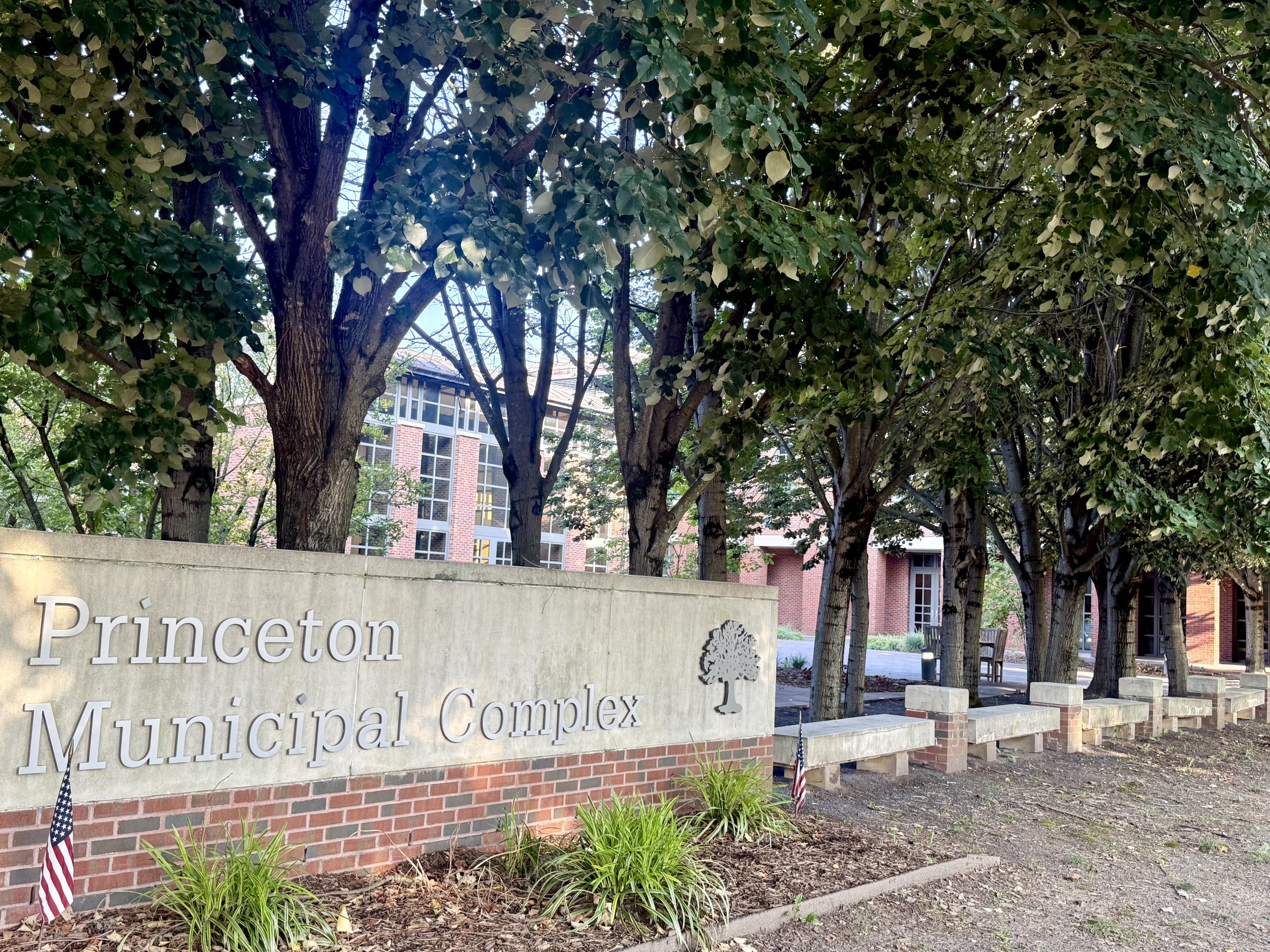
Princeton Municipal Complex, where the 2025 Community Needs Assessment was presented to Council on July 13, 2026. Photo by Princeton Policy Review.
In 2014, Princeton residents said the help they were looking for often didn't apply to their situation, or cost too much to use. In 2025, they're saying something different: the help exists, they just can't find it.
According to the 2025 Community Needs Assessment conducted between August and December of 2025 and presented to Council on July 13, 2026, more than half of the 253 low-to-moderate-income households surveyed pointed to the same underlying problem: a gap between the services Princeton offers and the services residents actually know about.
This isn't the first time Princeton has asked its residents what they need. An assessment was also conducted between 2020 and 2022, but because it took place at the height of the pandemic, it's hard to treat as a clean comparison. That makes the 2025 Community Needs Assessment the first truly comprehensive assessment Princeton has conducted since2014, eleven years earlier, and the findings were quite different.
That report identified rent and mortgage assistance as the biggest housing concern amongst respondents. The primary reason for this was the fact that many services offered then did not apply to the situations they needed help in. Moreover, those services were challenging for residents to access.
In 2025, that's not the case.
Since then, many new services for different situations have evolved within Princeton. Now, however, the problem rests upon the awareness residents have of such services. Affordable housing is a clear example. In Princeton, many people still don't know about the affordable housing options available to them, and for those who do, the process to acquire such a unit requires extensive applications to fill. The purpose of an affordable housing service is to spread awareness of affordable housing options and then guide and assist residents through it. If a service is unknown, none of what it offers, guidance, assistance, alleviating the process, ever reaches the people who need it.
Essentially, the problem 11 years ago has since evolved. Now Princeton doesn't lack services, it lacks the awareness of it to the people. This creates the “awareness gap.”
So what exactly led to these services not being known within the community? The likely reason lies behind the first step to anything, where to find these services:
Residents have spoken up about the on-site tools and navigators people used to rely on, that aren't here anymore. There is no one guiding people where to go, what to look for, and how to go about finding even one service. Once, residents relied on trusted professionals in their buildings to guide them to new services and organizations. Now, residents claim such relationships have “eroded over time,” with any on-site presence for navigation completely gone.
The report cites one resident suggesting a possible fix.
"The Princeton Human Services Department comes once a month to tell residents what's going on and help fill out papers."
But even for the residents who do find their way to an affordable housing listing, without a navigator, the process waiting on the other side is its own obstacle.
Applications for affordable housing within Princeton can be extensive, requiring a multi-step process, starting with a common application online and then spreading to separate paper forms for each individual property at the Princeton Housing Authority office. And even after the application process is finished, the wait time is indefinite. Some residents have reported waiting “about a year and a half to two years” without any results.
Affordable housing organizations are meant to guide residents through such a process like filling out applications. If that's not happening then that compromises the accessibility of affordable housing options to the people, with many just giving up or stopping at the application alone.
But the service gap only affects residents who qualify for affordable housing in the first place. For a growing number of Princeton families, the problem starts earlier than that.
Princeton, an already affluent Municipality, is now paving the way for more affordable units. However, many people argue that with these units specifically targeted for lower income families, there remains a missing middle. Families who earn enough to not fall within the requirement of affordable units, are still priced out of Princeton due to the market rate units exceeding their budget. Residents noted that the cost of living in Princeton is "disproportionately high,” making Princeton inaccessible to many middle class income families and professionals. So naturally, you're left to ponder, who in Princeton is really building housing for these middle income families? Or is this a new accessibility issue?
The report doesn't leave that question fully unanswered. Buried in its recommendations within the Opportunity 4 paragraph, the report addresses issues with both the service gap and the missing middle. However, in terms of the implementation, the only given answer is a list of housing organizations.
To understand what that actually looks like, Princeton Policy Review interviewed Councilman Leighton Newlin, a Council liaison to CARES, one of the organizations named in Opportunity 4, about what closing the awareness gap will look like in practice.
"The plan is still being worked on," the Councilman said. "But the plan is to set up workshops, perhaps at the Princeton Public Library. We want to make awareness greater by going right to the people."
On improving on-site navigation, the Councilman pointed to "the use of volunteers."
As for making the application process less difficult, he emphasized relying on local organizations, like Princeton Community Housing, to streamline the process rather than depending on larger, existing systems.
When asked about the timeline, and when residents might start seeing change, the Councilman said the council plans to meet CARES "as soon as possible," with a rough window of 30 to 60 days to set dates and reach out to community partners. He added that CARES will set up a table during Welcome Week, which takes place the second week of September. "Now that we know the report has shown a lack of awareness, it's go time," he said.
Ultimately, Princeton's own data shows the barrier has shifted, from a lack of services in 2014 to a lack of awareness and access today. With Opportunity 4 naming a list of organizations, the picture of implementation stayed incomplete. Councilman Newlin's interview filled in some of that picture: workshops, volunteers, and local partnerships all show that a plan is already taking shape. However, now the question forms: will real implementation follow, and will that be enough to actually close the gap?
Additional reporting by Audrey Zhang. Data not otherwise linked is from the 2025 Princeton Community Needs Assessment.
2025 Princeton Community Needs Assessment
Correction 08/12/26: The opening sentence has been updated for clarity. It now reads: "In 2014, Princeton residents said the help they were looking for often didn't apply to their situation, or cost too much to use."
We use your email only to send the monthly newsletter: never sold or shared, unsubscribe any time.